On Writing, Tiredly
Words by Emily Schneider. 20th December, 2025.
“Writing for Leduc, is a concentrated form of experiencing. She is a present-tense sort of writer, she records ‘the atoms as they fall upon the mind.’”
Deborah Levy, The Position of Spoons.
Today my plan was to get my next article written. The task sat there all day in my to-do list, passively watching me, a small box waiting to be ticked off. And of course, it is now past 9pm. I’m tired. And quite frankly, my imagination wasn’t doing very inspiring things today. But I made a promise to myself that I would write at least one piece of work a week, at a minimum. So, here we are.
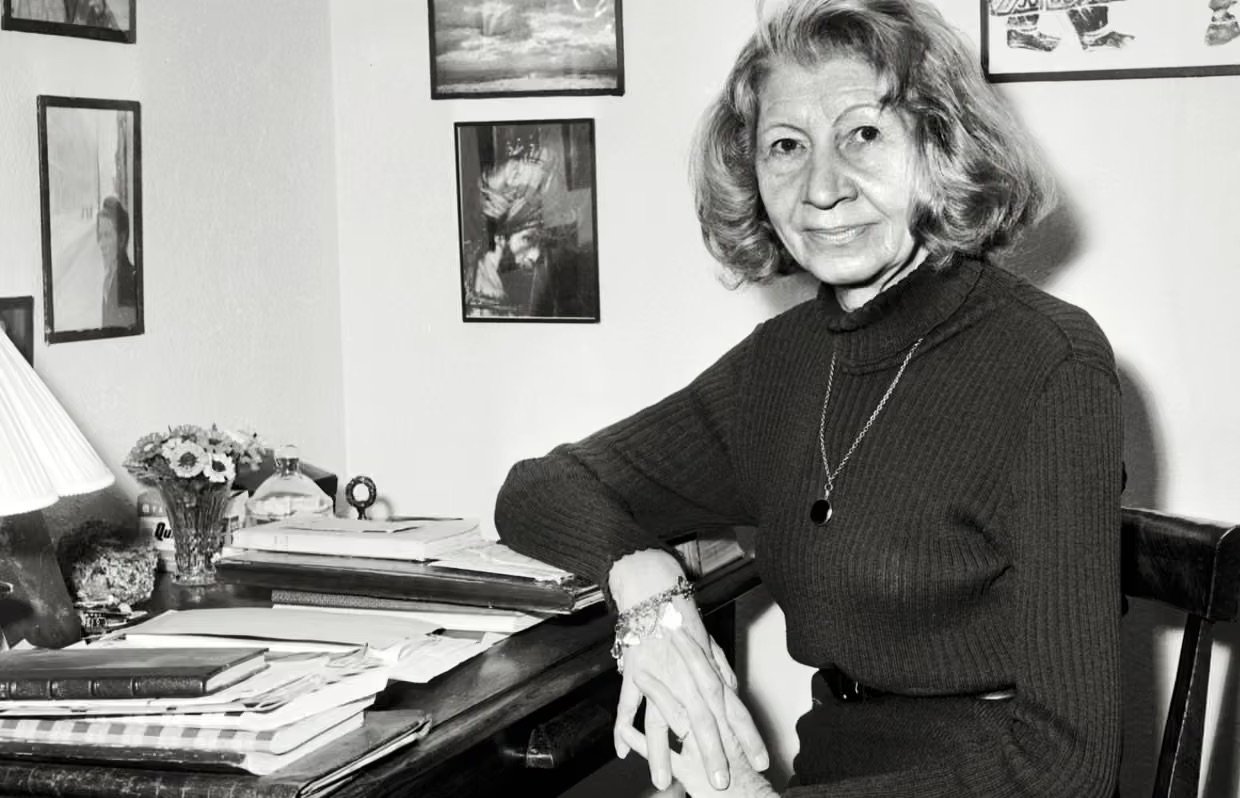
I remembered this quote that I read earlier this week about the French feminist writer Violette Leduc in a chapter of Deborah Levy’s The Position of Spoons. I had never heard of Leduc before. A French feminist writer, she was Simone de Beauvoir’s protégé and admired by writers like Jean-Paul Sartre, Albert Camus, and Jean Genet. Yet her books are not shelved alongside theirs. She is not discussed in seminar rooms or at dinner parties in the same way as her counterparts.
Born poor and illegitimate to a servant mother seduced by her employer, Leduc was an unwanted child. Her feminist education came not from books or café conversations, but from lived experience, her mother’s exhortations, her body. Literature, for Leduc, was a way of looking. Something uncomfortably real, devastatingly honest. It was not an exercise in theory or debate. Levy describes her as “a writer who was going to give maximum attention to the cause of her distress… Leduc experiences everything in her body… [she] energises whatever she gives attention to.” The lived feminism of Leduc was not deemed worthy of cultural canon.
The story of Leduc deeply fascinated me. In writing, it is often expected to have some sort of solution at the end; a story of hardship that somehow ends in happiness and erasure of any pain, anger, and hurt. Her writing was not this. It didn’t aim to change anything, solve anything. It didn’t offer solutions or neat endings: “To write is to change nothing.”
That refusal to resolve mirrored exactly how I felt today. Starting and stopping, opening documents and closing them again. I have a long list of article ideas, good ones, ideas I believe could be useful, meaningful, valuable to someone. But choosing one felt overwhelming. I couldn’t see the ending. I couldn’t tie anything up tightly. I didn’t have a solution to offer.
There is an incessant, often unconscious voice that tells me I should be productive. That I should add value. That I should know what I’m talking about. And I think this is true for most girls in their mid-twenties. But the truth is, I am also lost. Unsure of where life is taking me. Unsure whether the thoughts or advice I might offer are even right. I’ve always struggled with leaving things unfinished. Doing things imperfectly. Allowing work to exist without justification. Leduc reminded me that maybe it doesn’t have to be that way. That sometimes, writing doesn’t need to arrive anywhere. Sometimes it is enough simply to survive the moment you’re in.
I want to give myself some grace here. I think I’ve only just recently reconnected with my creativity. It’s very easy to lose that connection, especially now. When boredom arrives, we reach instinctively for the quick-fire dopamine release that is our phones. For endless lives unfolding in front of us. It’s scary – for so long I had forgotten what it is that I am actually really good at. Because for so long, I have been observing the lives of so many others unfold in front of me. It’s easy to forget yourself when you encounter so many others.
As the year comes to an end, I want to acknowledge this reconnection. Finding comfort again in writing, in art, in music, in reading. In anything that pulls me away from living through other people on a small screen. And I don’t entirely agree with Leduc when she says writing changes nothing. Writing doesn’t need to change the world. But it can change something quieter. It can be a return, a ritual. A form of paying attention. A way of listening to yourself in an age that rarely encourages it.
Leduc mattered to me today because she refused to resolve anything. Her writing didn’t rush toward meaning or redemption, and in that refusal, I felt oddly relieved. I didn’t have to finish a thought neatly or arrive somewhere conclusive. I could stay with sensation instead — with the body, with experience, with the mess of it all. Writing, for her, wasn’t a performance or a product. It was a way of surviving. And maybe that’s enough. Maybe that has always been enough.